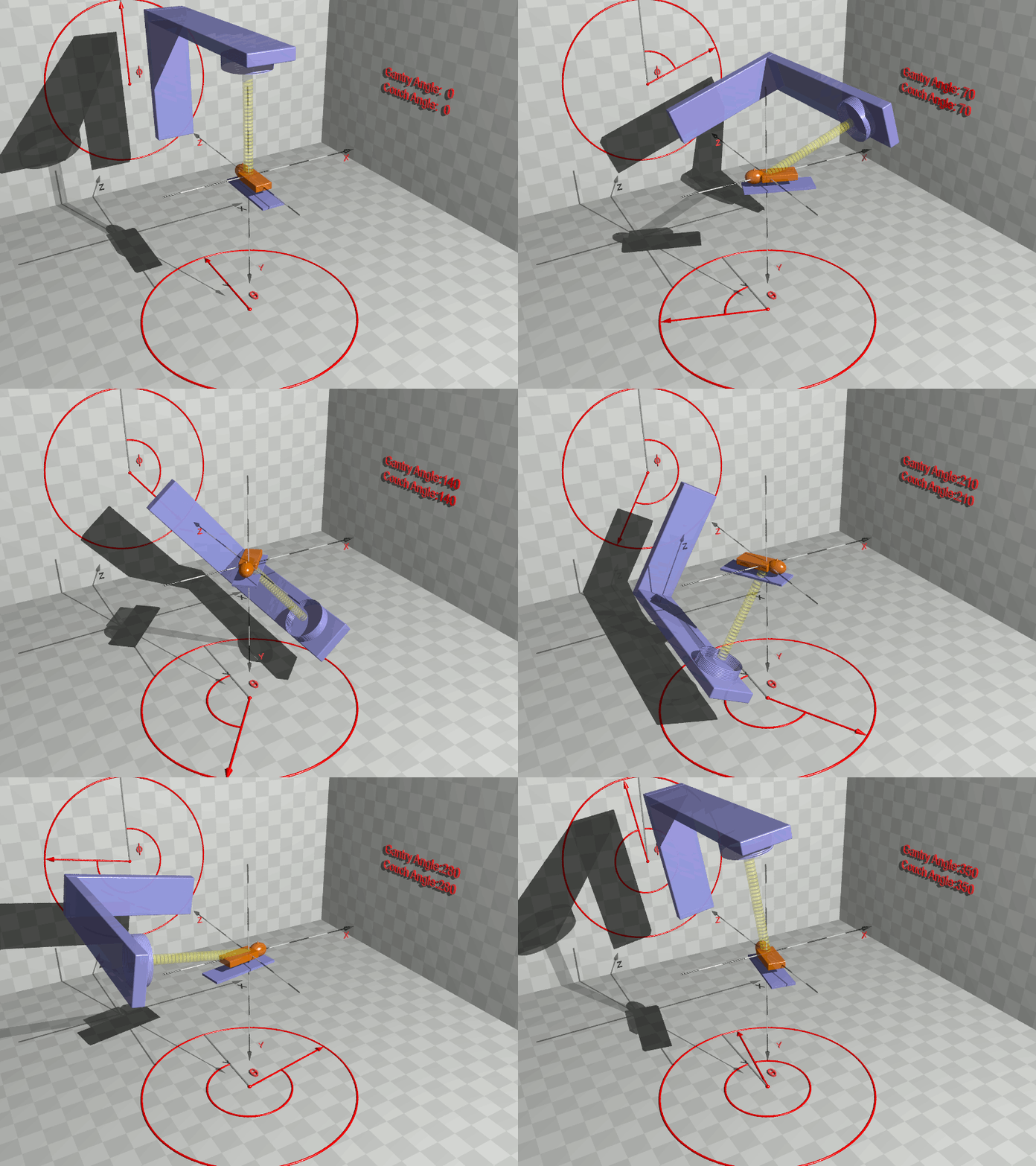
The matRad Coordinate System
LPS Coordinates
matRad uses the LPS (Left, Posterior, Superior) coordinate system.

In this system, the x-axis points towards the left patient-side, the y-axis towards the posterior direction, and the z-axis towards the superior direction (see image below).
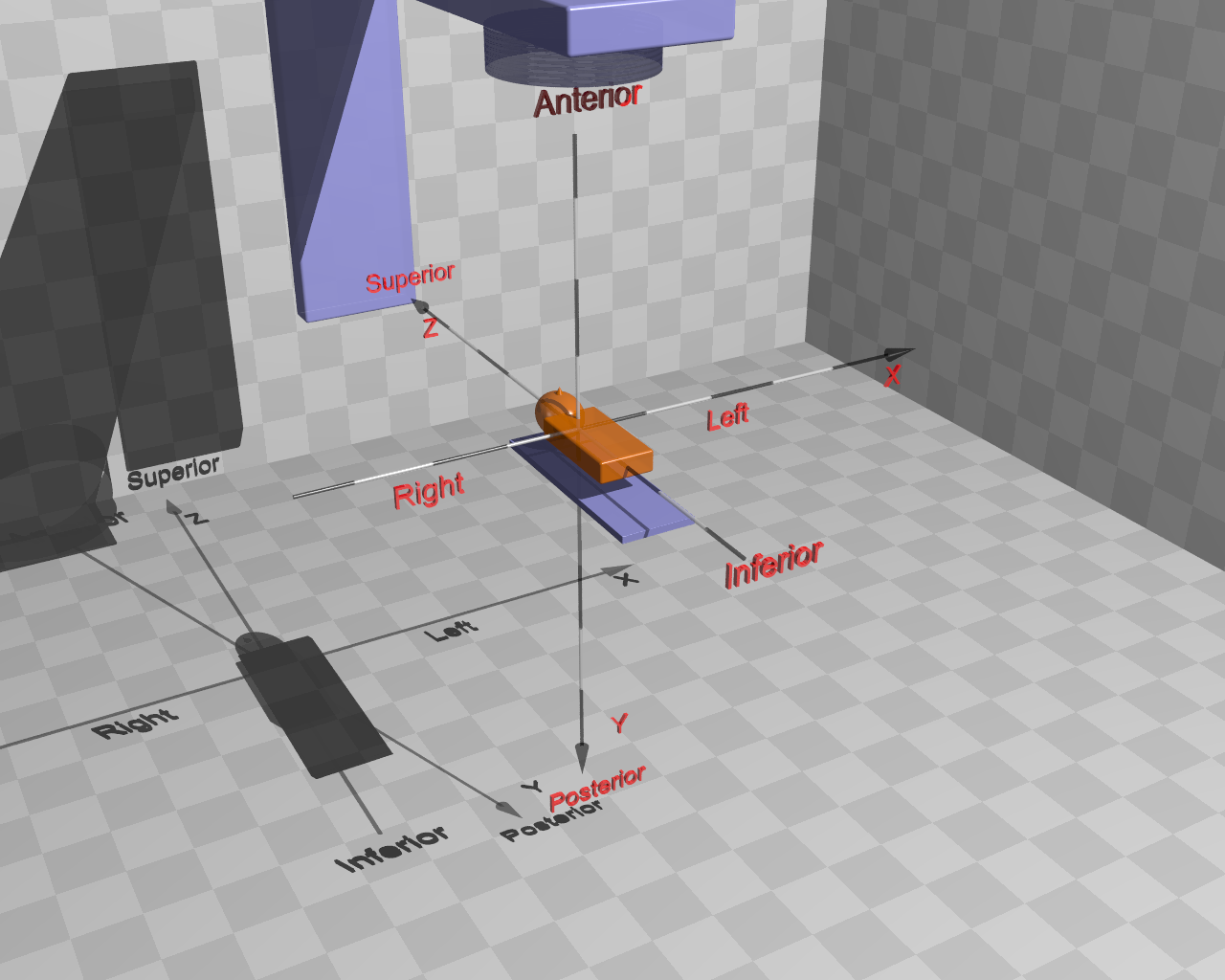
3D points, e.g., the isocenter in the pln struct or source and target points in the stf struct, directly follow the conventions of the LPS coordinate system: The first coordinate, e.g., pln.isoCenter(1) corresponds to the x coordinate (right-left direction).
For the dose and CT cubes, which are stored as MATLAB 3D arrays, the second dimension corresponds to the x-coordinate (right-left direction), and the first dimension corresponds to the y-coordinate (anterior-posterior direction).
This permutation is due to MATLAB’s standard way of displaying two-dimensional matrices with the image command, which displays the first array dimension along the vertical direction.
Tip
In short this means that coordiantes (x/y/z) correspond to a (j,i,k) indexing.
This is similar to the difference between MATLAB’s meshgrid and ndgrid functions, where the first function uses the first dimension for the x-coordinate and the second dimension for the y-coordinate, while the second function uses the first dimension for the y-coordinate and the second dimension for the x-coordinate.
World vs Cube System
matRad differentiates between a world system and a cube system.
Coordinates in the ct struct as well as the plan isocenter, for example, are always given in world coordinates.
Cube coordinates are defined on an image cube (e.g. the ct.cube).
To enable fast access, they are defined such that the coordinates of the most right, anterior, inferior voxel center in the cube has the coordinates (resolution.x / resolution.y / resolution.z).
Consequently, the most right, anterior, inferior corner of the most right, anterior, inferior voxel is not located at (0 | 0 | 0) but at (resolution.x/2 | resolution.y/2 | resolution.z/2).
Danger
In versions prior to matRAd 3.1.0, the isocenter was given in the cube system. This was changed because during resampling of the dose grid, the isocenter often was different in the dose cubes coordinate system.
Conversion between world coordinates, cube coordinates and voxel indices
matRad provides helper functions in the geometry folder.
matRad_world2cubeCoords()converts world coordinates to cube coordinates.matRad_cubeCoords2worldCoords()converts cube coordinates to world coordinates.matRad_world2cubeIndex()converts world coordinates to voxel indices.matRad_cubeIndex2worldCoords()converts voxel indices to world coordinates.
There is no function to convert cube coordinates to voxel indices, as this is a simple operation:
%Get the indices from coordinates
coords = round(coords ./ [gridStruct.resolution.x gridStruct.resolution.y gridStruct.resolution.z]);

%Do the permutation
indices = coords(:,[2 1 3]);
Gantry and Couch Rotation
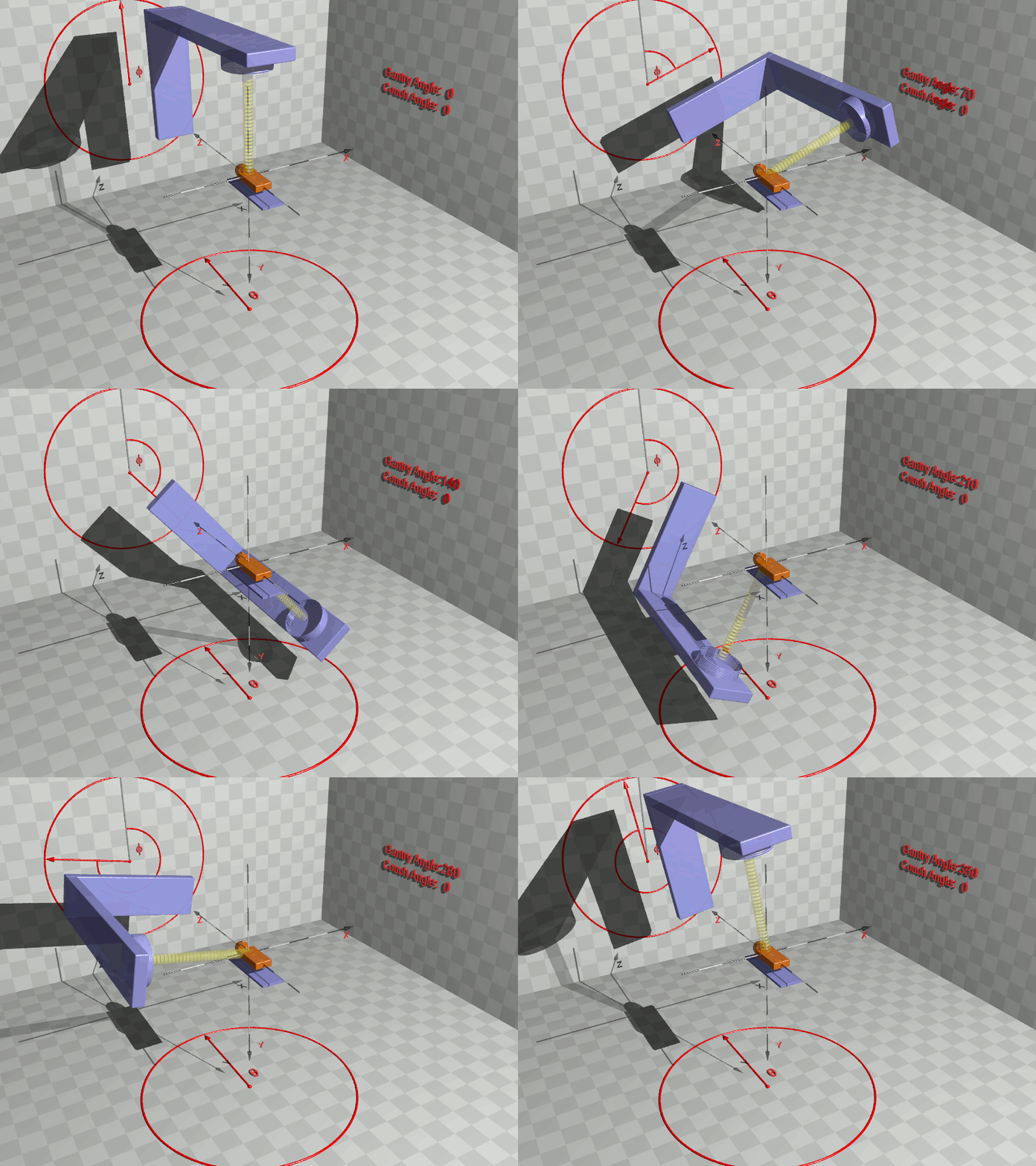
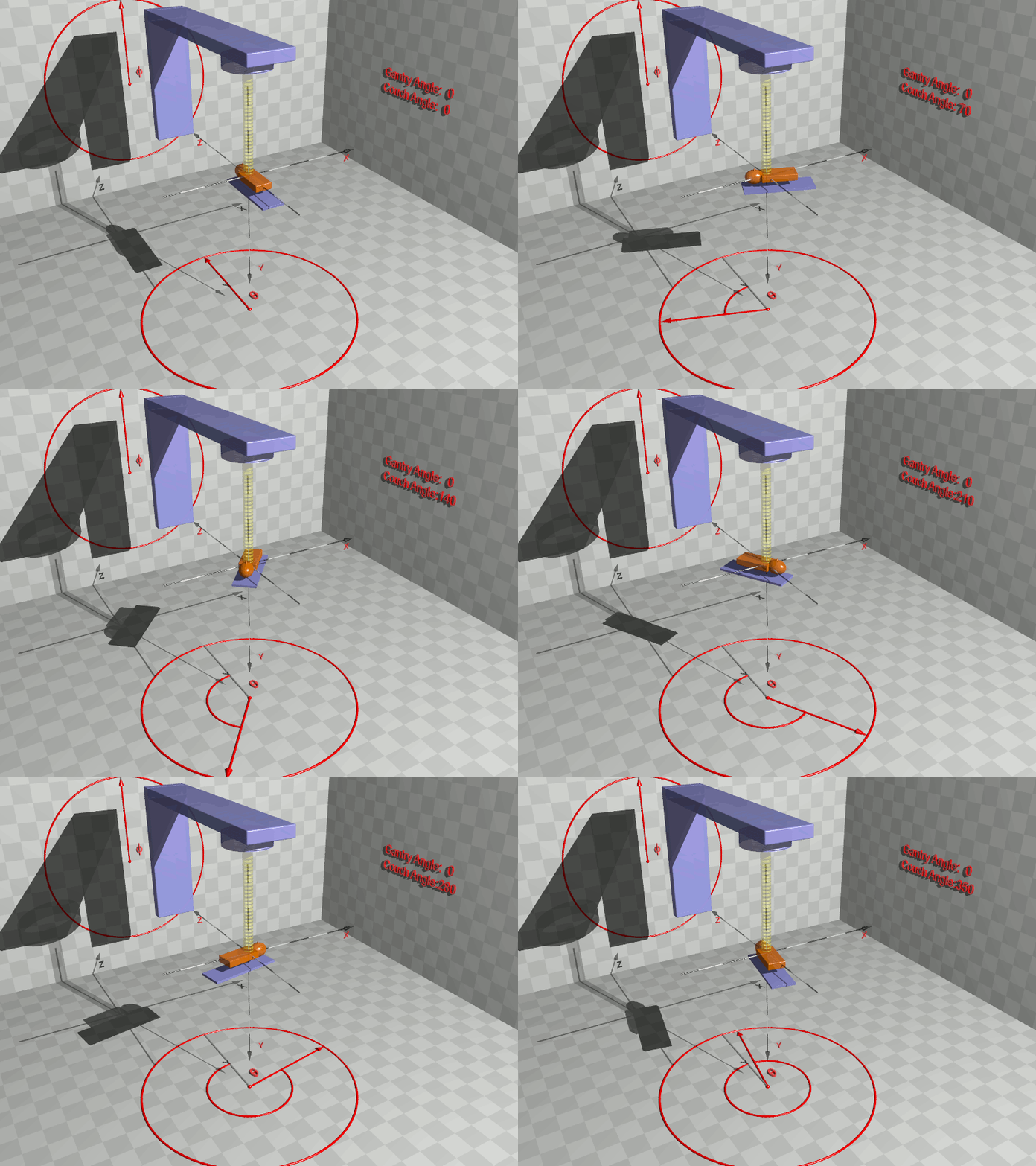
The rotation of the gantry (Φ) and the couch (θ) are defined as follows:
Gantry: Clockwise rotation around the z-axis
Couch: Counter-clockwise rotation around the y-axis
The rotation matrix can be obtained with matRad_getRotationMatrix().
Simple gantry rotation:
Simple couch rotation:
Simultaneous couch and gantry rotation: